Regional Economic Mobility: Evaluating the Socioeconomic Dividends of Vande Bharat Corridors
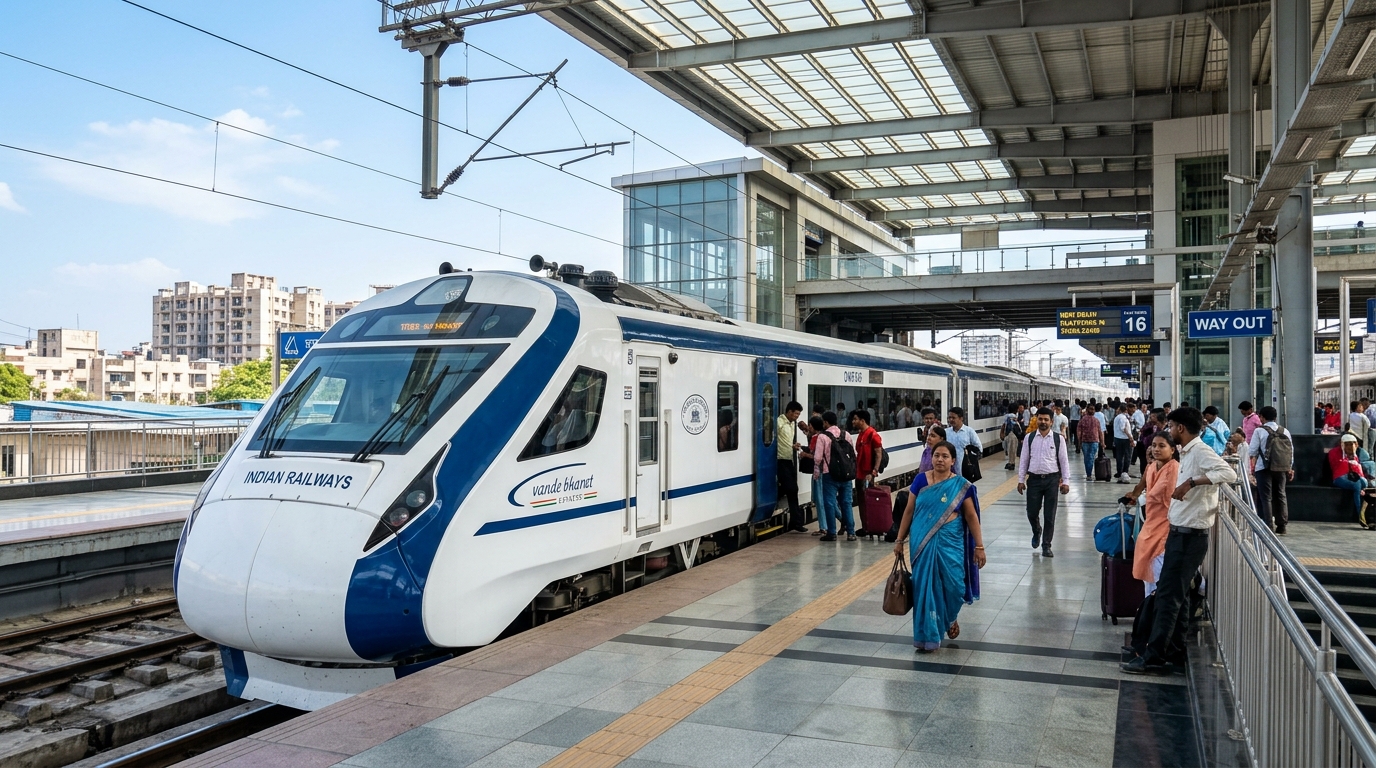
ARCHIVAL CITATION: Academic documentation related to Regional Economic Mobility: Evaluating the Socioeconomic Dividends of Vande Bharat Corridors.
An academic study on inter-city economic connectivity indicates that semi-high-speed rail links between tier-2 and tier-1 metropolitan centers stimulate regional commerce.
Travel time reductions of 30% to 45% enable same-day business travel, fostering specialized medical consultations, educational exchanges, and commercial partnerships across secondary cities.
The indigenous Kavach 4.0 automatic train protection system enhances passenger confidence while supporting local manufacturing in railway engineering clusters.
"Modern transportation infrastructure compresses economic geography and equalizes regional development opportunities."
Urban planners project that expanding high-frequency rail links reduces highway carbon emissions and mitigates metropolitan housing congestion.
Related Policy Monograph: